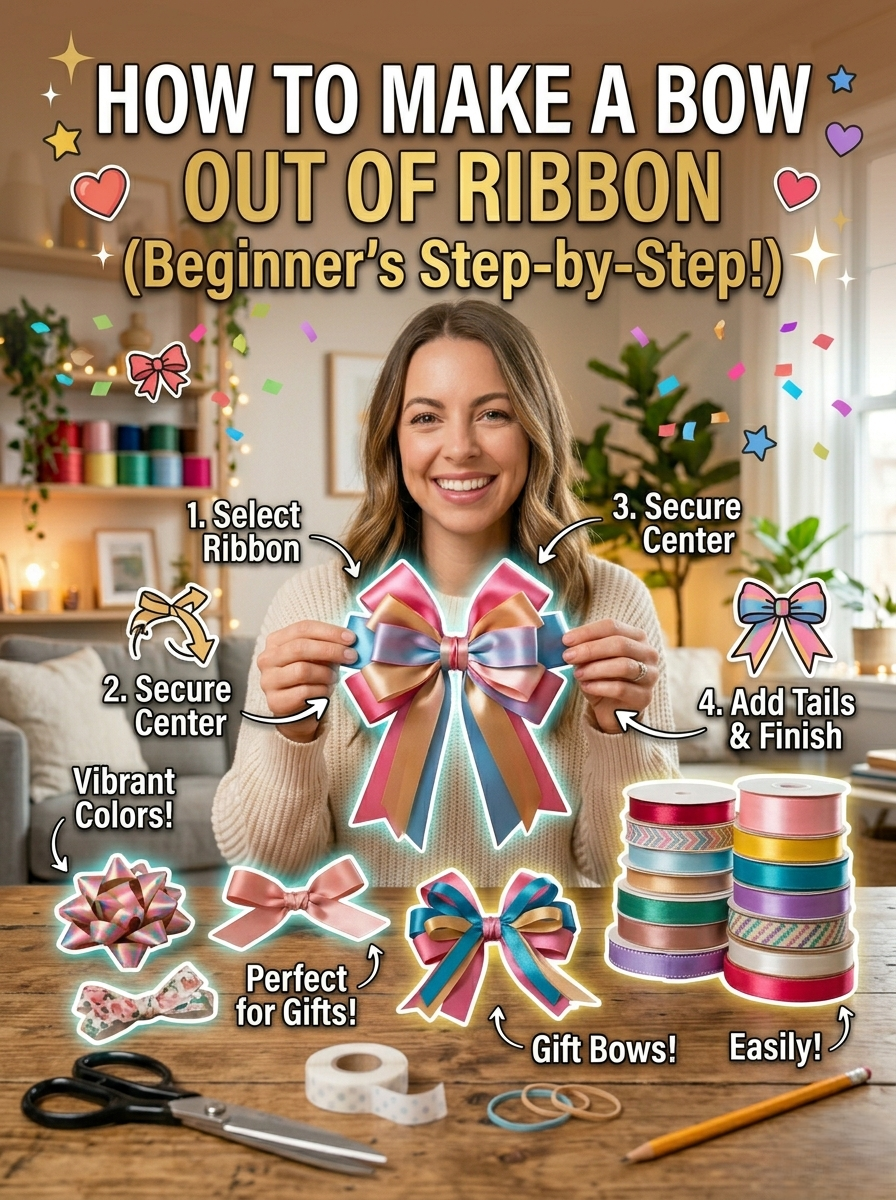

I spent years avoiding ribbon on gift wrapping because every time I tried to tie a bow it looked like I had made it with my eyes closed. Lopsided loops, one tail longer than the other, the whole thing collapsing the second I let go. I could wrap a box beautifully and then ruin it completely with the bow on top.
It turned out the problem was not my hands — it was that nobody had ever shown me the actual technique. A ribbon bow is not a shoelace knot done bigger. It is a completely different method, and once you know which method you are using and why, it takes about two minutes to make something that looks genuinely impressive.
This guide covers four bow methods from simplest to most ambitious, with honest step-by-step instructions for each. No special tools, no craft wire, no equipment beyond scissors and ribbon. By the end you will have at least two of these in your permanent gifting toolkit.
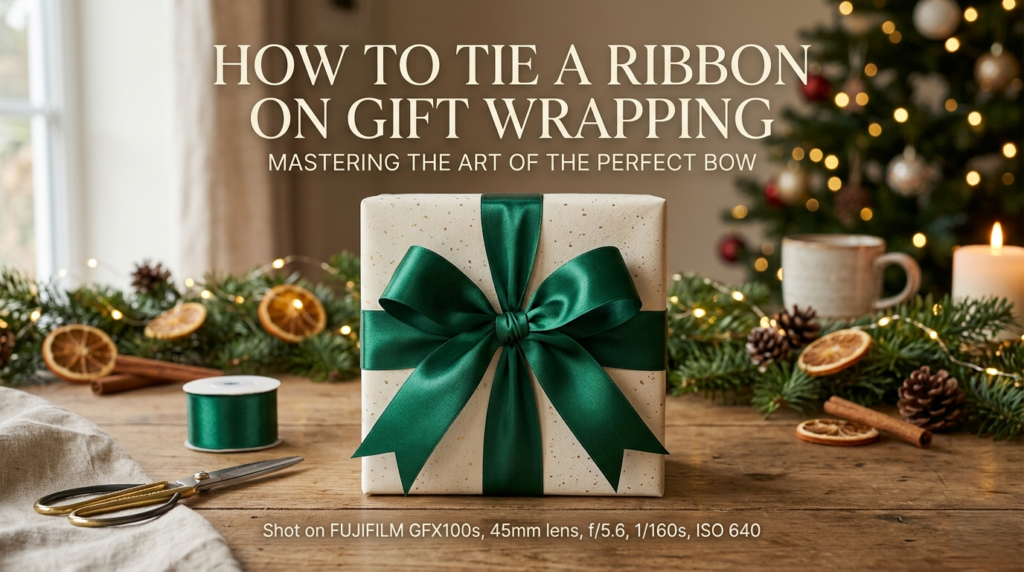
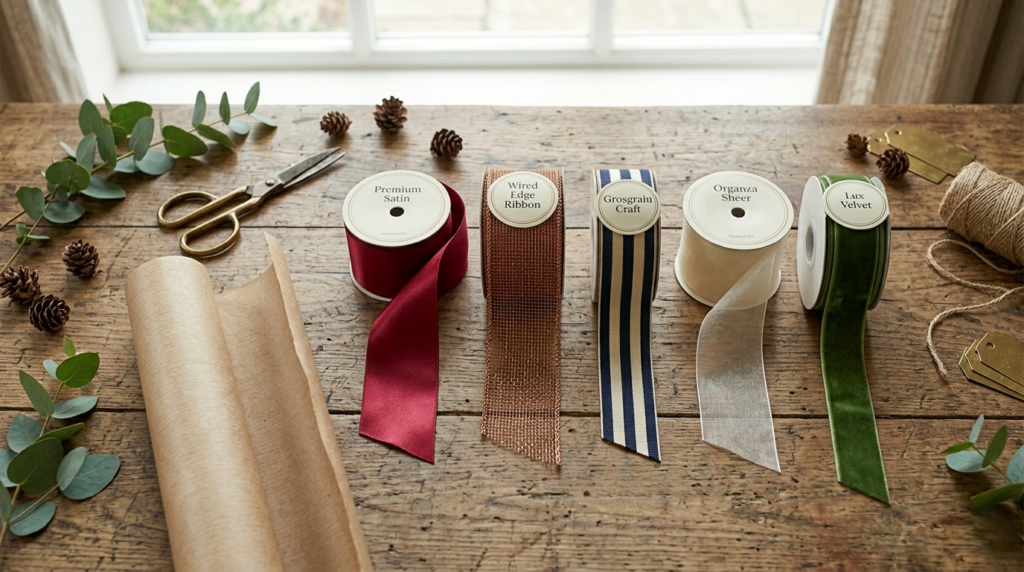
Quick guide — which ribbon works for which bow
Satin ribbon
Best for all four methods. Holds a loop well, looks elegant, widely available. Start here if you are new to this.
Wired ribbon
Easiest for beginners — the wire holds each loop in shape. Great for the florist bow. Slightly stiffer feel.
Grosgrain ribbon
Matte, textured, slightly stiffer. Works beautifully for the simple tied bow. Good for a more casual or craft look.
Organza or sheer ribbon
Delicate and floaty — best for the pom-pom bow or single knot. Harder to control for beginners but the result is very pretty.
Jute twine or velvet ribbon
Use for the simple tied bow or single knot only — these materials do not hold structured loops well but look beautiful tied simply.
Ribbon width: 25mm (1 inch) is the most versatile width and works for all four methods below. Narrower ribbon suits simple knots; wider ribbon (40mm+) suits the florist and pom-pom bows.
Method 1 — The Simple Tied Bow (30 Seconds, Always Works)
This is the method most people already know from tying shoelaces — but done deliberately and with a little more care, it looks completely different. It is the right choice when you want something clean, elegant, and quick. The secret to making it look polished is symmetry, which comes from one simple adjustment most people skip.
What you need
- Ribbon of any kind — approximately 60–80 cm for a generous bow on a medium gift
- Scissors
Step by step
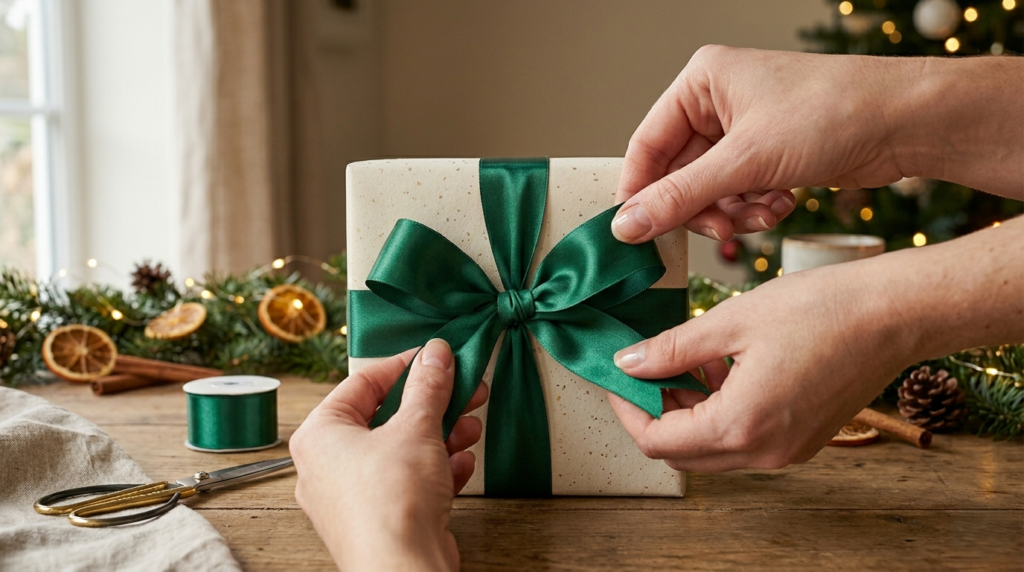
- Run your ribbon around the gift and cross it over at the top, pulling firmly so it lies flat against the box — no slack in the ribbon across the surface
- Tie a single knot at the crossing point and pull it tight. This anchor knot is what keeps everything in place — pull it tighter than feels necessary
- Form your first loop with one tail. Hold the base of the loop firmly between your thumb and index finger so the loop does not shift
- Wrap the second tail around the base of the first loop once — this is the part most people rush, and rushing is why the bow slides. Take a breath, hold it deliberately, and pull the second tail through the gap slowly
- Pull both loops outward simultaneously and evenly — this is the step that creates symmetry. If one loop is larger, tug the smaller one gently by pulling its tail end back through the knot slightly until both loops match
- Trim the tails to equal lengths and cut the ends at a 45-degree angle or a shallow V — both finishes look more intentional than a straight cut
The one thing that makes the biggest difference: pulling the knot tighter than feels right before you form the loops. A loose anchor knot is what causes the whole bow to slide off to one side. Tight knot first, then loops.
Method 2 — The Classic Florist’s Bow (The One That Looks Expensive)
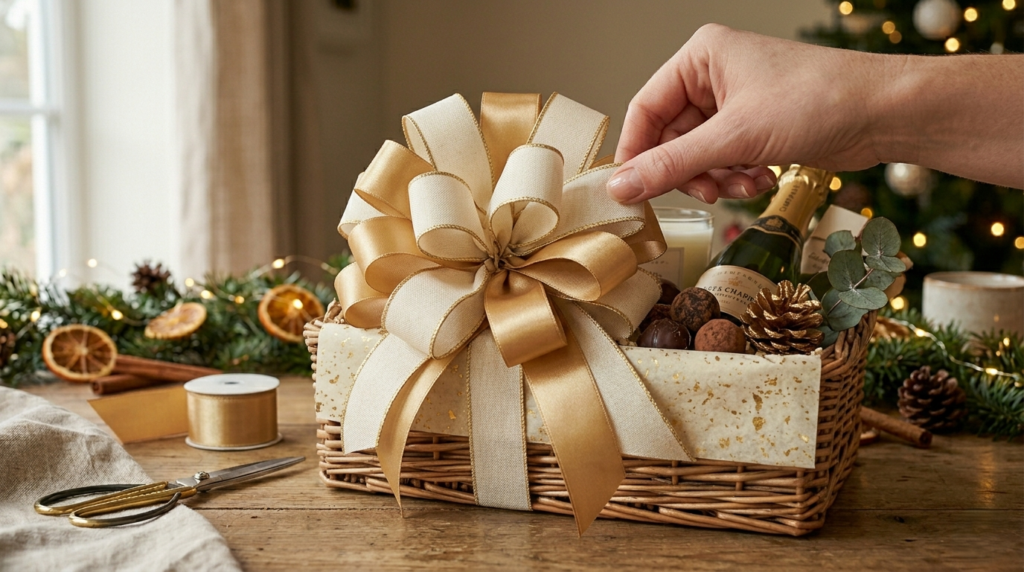
This is the bow you see on florist arrangements, luxury hampers, and professionally wrapped gifts. It has multiple loops and looks considerably more complicated than it actually is. The entire technique comes down to one repeated motion — pinch, loop, pinch — that takes about two minutes once you have done it once.
What you need
- Ribbon — approximately 90–120 cm. Satin or wired ribbon works best for this method
- Scissors
- One 20 cm piece of thin ribbon or a twist tie to secure the centre (this is the only thing that makes it easier — if you do not have one, a piece of tape works)
Step by step
- Hold the ribbon about 15 cm from one end between your thumb and index finger — this 15 cm tail will hang down as a streamer at the end, so hold it pointing downward
- With your other hand, make a loop on one side of your thumb, bringing the ribbon back to your pinch point. Hold the base of this loop between your thumb and finger — you are now pinching the centre of the bow
- Make a loop on the other side, bringing the ribbon back to the pinch point again. You now have two loops — one on each side — and you are still pinching the centre
- Continue making loops, alternating sides, pinching the centre each time. Each loop should be roughly the same size as the last. Aim for 3–4 loops per side for a medium bow, 5–6 for a larger one
- When you have the size you want, cut the ribbon leaving another 15 cm tail hanging down on this side to match the first
- Wrap your short piece of thin ribbon (or twist tie) tightly around the pinch point in the centre and secure it. If using tape, wrap it around the pinch point twice
- Hold the bow by the centre and begin pulling individual loops outward and apart — gently, one at a time, rotating as you go — spreading them until the bow looks full and round
- Fluff until you are happy, trim the hanging tails to matching lengths with V-cut ends
The first time you make this bow it will take five minutes and look slightly chaotic before the fluffing stage. Do not panic during step 7 — the pulling-apart step is what transforms what looks like a squashed bundle of loops into the finished bow. Trust the process through to the end before deciding it has gone wrong.
Using these bows for holiday wrapping?
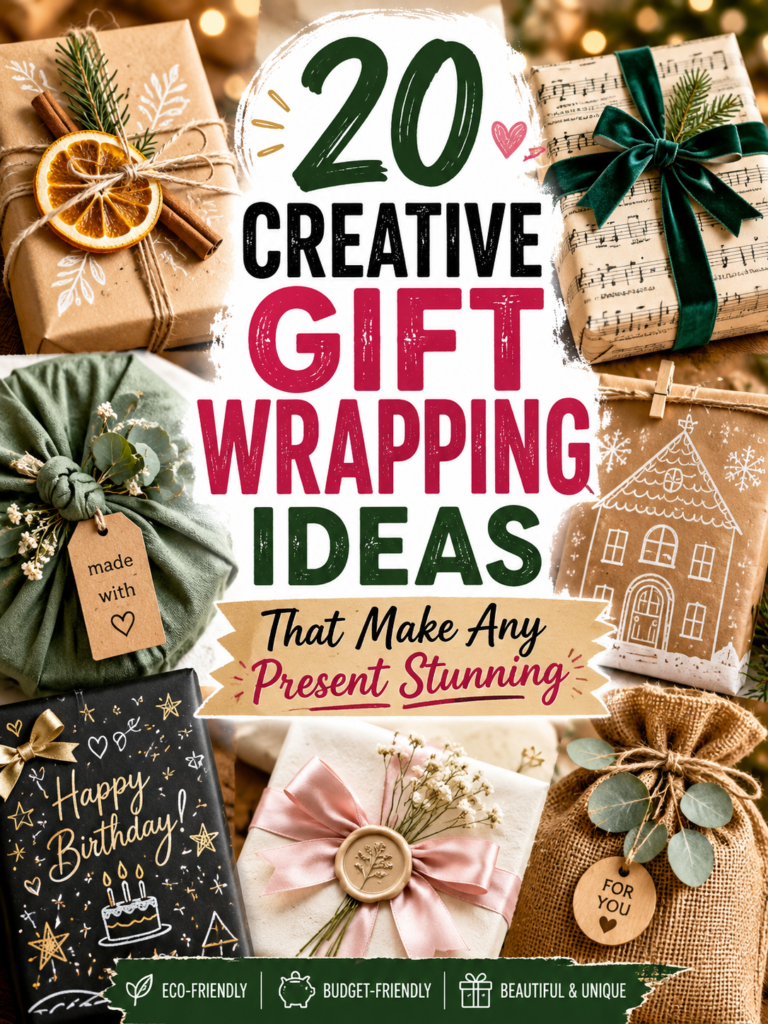
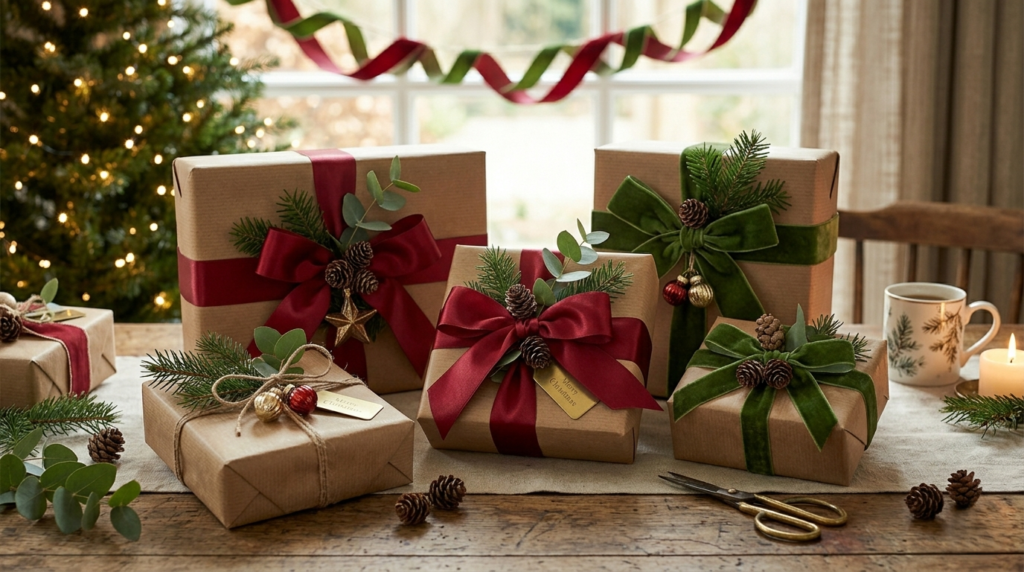
The florist bow and pom-pom bow both look stunning on Christmas and seasonal gifts. Our holiday gift wrapping ideas guide shows how to combine ribbon bows with different paper styles, colour palettes, and finishing touches for a consistent, beautiful look across a whole set of wrapped gifts.
Method 3 — The Pom-Pom Bow (Most Impressive Gift Topper)
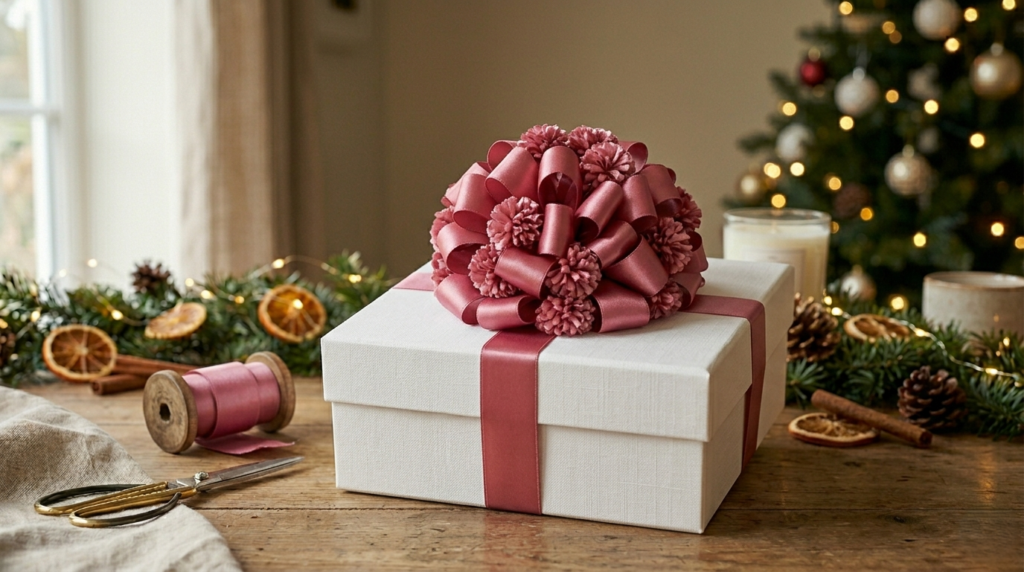
This is the full, round, many-looped bow that sits on top of a gift like a flower — the kind that looks like it took ten minutes and actually takes three once you know the trick. It works especially well on top of a box rather than around it, and it is the bow I default to when presentation really matters. According to The Spruce Crafts, this style of loop bow is the most commonly used technique in professional gift wrapping because it photographs so well and scales to any ribbon width.
What you need
- Ribbon — approximately 2–3 metres for a generous pom-pom bow. Satin, wired, or organza all work well
- Scissors
- Sticky tape or a small brad/split pin to secure the centre
Step by step
- Cut your ribbon into loops of equal length — eight to twelve loops, each approximately 18–22 cm, depending on how large you want the finished bow. Stack them in a neat pile
- Take the first two loops and cross them over each other at their centres so they form a plus sign (+). Tape or pin the centre point
- Add the remaining loops one at a time, each at a slightly different angle to the last, securing each at the centre — imagine the loops as the spokes of a wheel radiating outward in different directions
- Once all loops are secured, begin pulling individual loops upward and apart, alternating between the top layer and the layer below, shaping the bow into a full round form
- Adjust until the bow looks balanced from all angles — a round, full, flower-like shape is what you are after
- Attach to the gift by pressing the taped centre onto the wrapped box. A small piece of double-sided tape underneath the bow centre holds it firmly
Make it even fuller: add a second set of loops made from a narrower ribbon in a complementary colour, layered on top of the first. Two ribbon widths in similar shades — say, a wide blush pink and a narrow pale gold — creates a bow that looks genuinely boutique.
Method 4 — The Single Knot Bow (Minimalist and Modern)
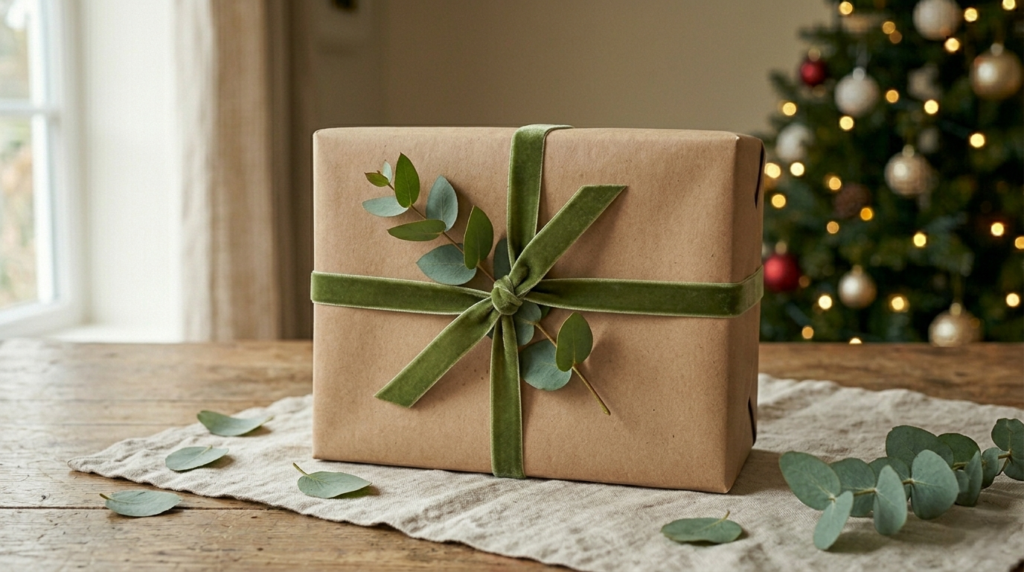
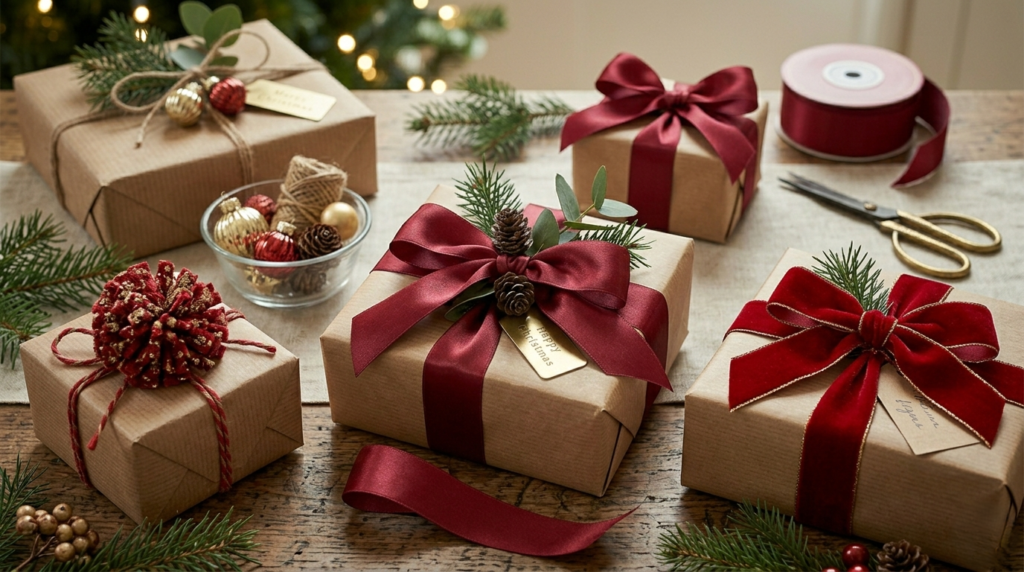
Sometimes the most elegant option is the simplest one. The single knot bow — one clean knot tied at the top of a gift with two equal tails hanging down — looks deliberately minimal and works particularly well with kraft paper wrapping, velvet ribbon, or thick jute twine where a fussy multi-loop bow would look out of place.
Step by step
- Run your ribbon around the gift and bring both ends to the top — either crossing them first and bringing them up, or simply running one long length over the top and letting both ends hang
- Tie a single overhand knot — simply cross one end over the other and pull through, exactly like the first step of tying a shoelace
- Pull the knot tight and centre it on top of the gift
- Arrange the two tails so they hang evenly on either side — trim to equal lengths, cut the ends at an angle or a V
- Optional: tuck a small sprig of dried flower, a cinnamon stick, or a sprig of eucalyptus under the knot before tightening it. This works beautifully with jute twine and kraft paper and adds texture and scent to the whole package
This is the bow I use most often for everyday gifting precisely because it takes thirty seconds, uses almost no ribbon, and — when done with the right ribbon and a small natural element — looks more considered than a complicated multi-loop bow on the wrong kind of wrapping.
The Four Mistakes That Make Bows Look Homemade (and How to Avoid Them)
01
Unequal loop sizes in the florist bow
Fix: hold the ribbon at the same point each time you complete a loop. Consistent pinch point = consistent loop sizes.
02
The bow slides to one side of the gift
Fix: the anchor knot underneath the bow is too loose. Retighten the knot first, before worrying about the bow shape on top.
03
Tails of different lengths
Fix: trim after tying, not before. It is almost impossible to pre-cut ribbon to equal lengths accounting for the knot. Always trim last.
04
Flat, collapsed loops that will not hold their shape
Fix: switch to wired ribbon, or curl satin ribbon by holding it taut and running the blade of a closed scissors firmly along it — the heat and tension creates a gentle curl that helps loops hold their form.
Bonus — How to Curl Ribbon Tails
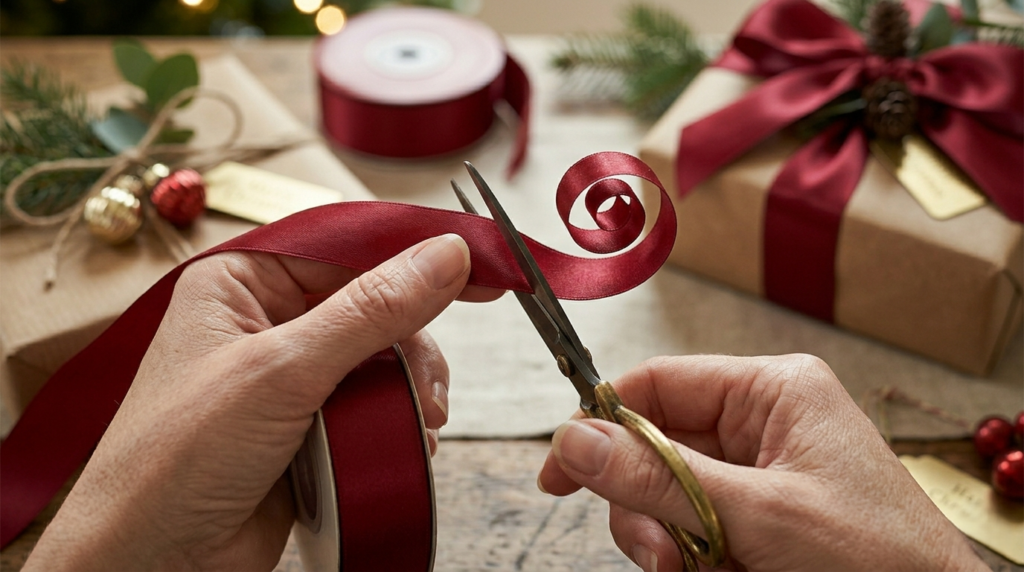
Curled ribbon tails are the finishing touch that makes any bow look more professional and adds movement to a flat-topped package. The technique takes about five seconds once you know it.
Hold a length of ribbon firmly against the flat side of a pair of scissors with your thumb. Pull the ribbon away from you quickly and firmly, keeping your thumb pressed against the blade as it runs along the ribbon. The friction and tension creates a natural curl. The tighter you hold and the faster you pull, the tighter the curl. Practice on a spare piece of ribbon first — a gentle pull gives a soft wave; a fast, firm pull gives a tight spiral. Both look good; which you use depends on the overall style of the package.
This works on satin and gift ribbon only — it will not curl grosgrain, organza, or jute. And do not attempt it with sharp scissors where the blade is fully open. Closed scissors held at an angle, with the ribbon running along the flat part of one blade, is the correct and safe technique.
Wrapping an awkward shape with all this beautiful ribbon?
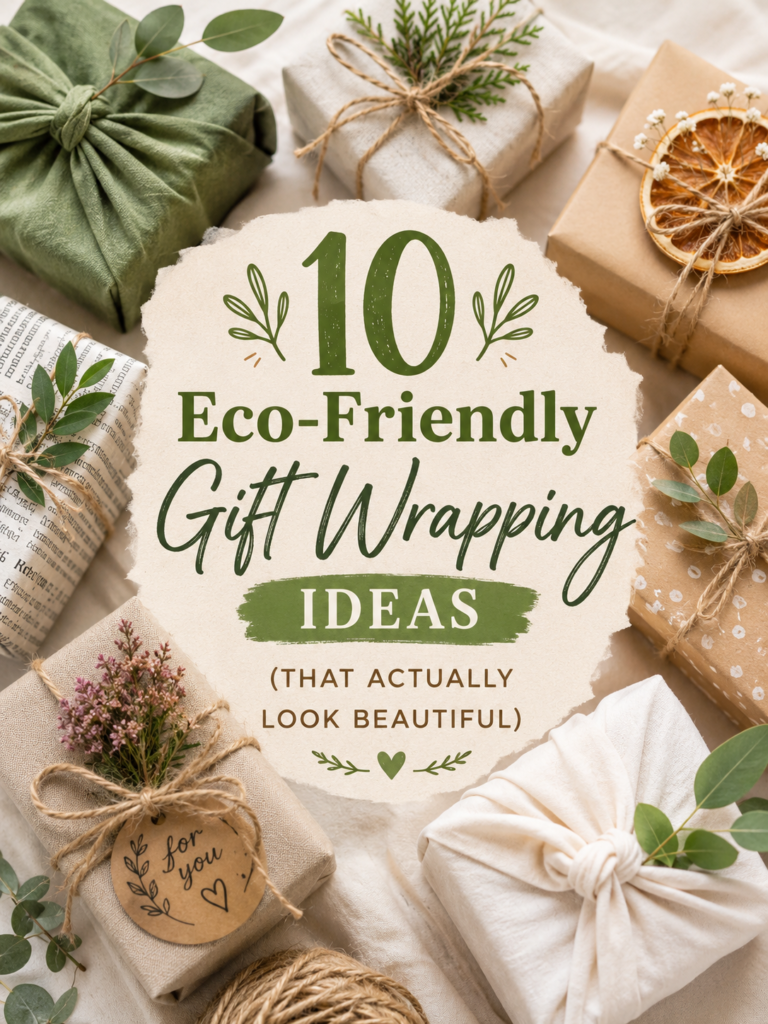
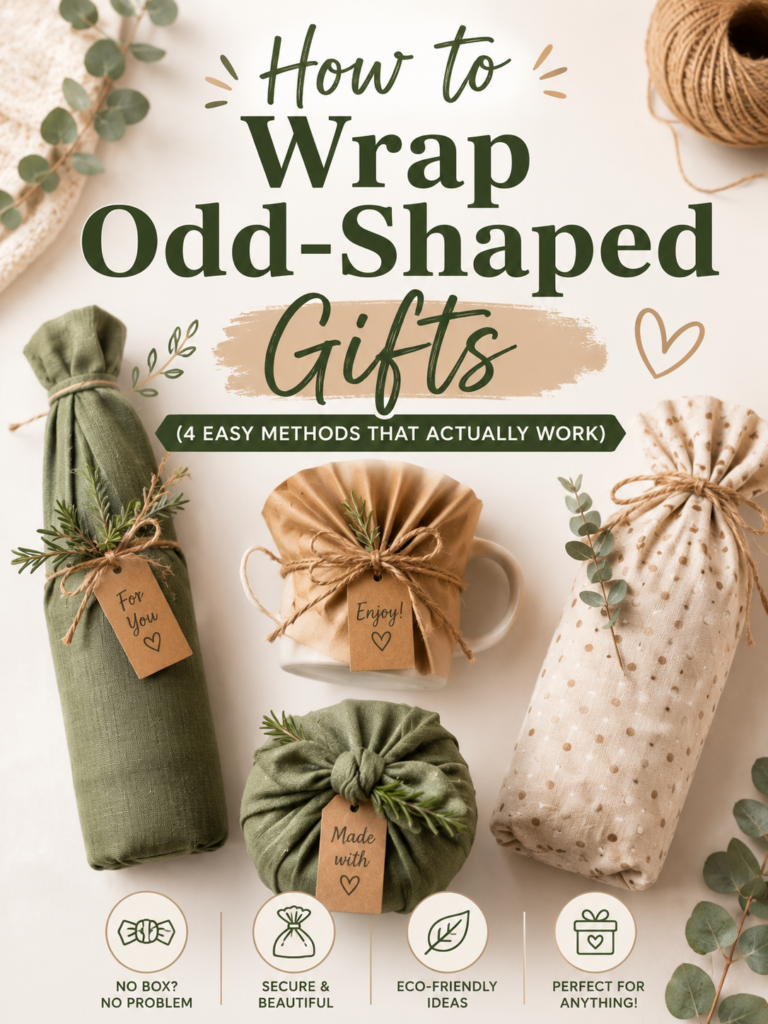
A great bow deserves great wrapping underneath it. Our guide to wrapping odd-shaped gifts covers the specific techniques for bottles, cylinders, spheres, and irregular shapes — the gifts that standard wrapping instructions never account for. And if you are putting together party favours or gift bags, our handmade party favour packaging guide shows how to use ribbon bows on smaller items like jam jars, pouches, and favour boxes for a consistent, polished look across a whole set.
The first bow you make from this guide will not be perfect. The second one will be noticeably better. By the third or fourth you will have a method that feels natural and produces something genuinely lovely in a couple of minutes — and wrapping gifts will feel like a different activity entirely.
There is a disproportionate amount of pleasure in finishing a wrapped gift with a bow that looks exactly right. It takes almost no time, costs almost nothing, and it is the thing the person unwrapping it notices before anything else. A bow is the full stop on a sentence. It tells the person holding the gift that you cared about every part of it, right to the end.
More from Warm Gifting
More gift packaging and wrapping ideas